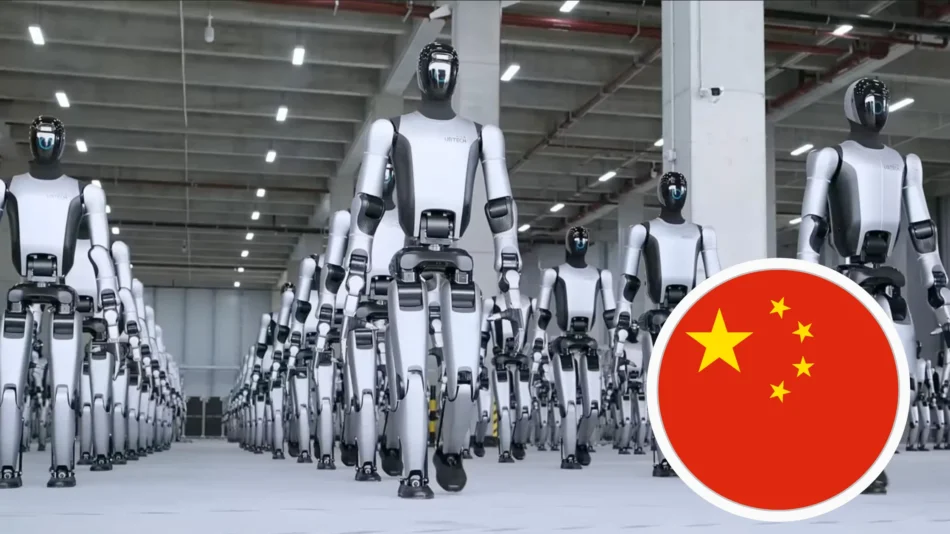

China has started one of the world’s largest commercial rollouts of advanced humanoid robots, marking a major leap from testing labs to real-world factories and data centers. Humanoid robots are now being deployed in batches to handle complex tasks in industrial environments.
The robot at the center of this shift is the Walker S2, developed by the company UBTECH. These robots are not simple machines; they are designed with advanced “embodied intelligence,” allowing them to move, perceive their surroundings, and make autonomous decisions to complete their work.
USA NVIDIA is at the forefront of AI and GPU technology. Its chips power gaming
Key Features of the Walker S2 Robot
The capabilities that make this large-scale deployment possible include:
- Embodied Intelligence: The robot can understand its environment and perform tasks that require mobility and dexterity.
- Autonomous Operation: It can work independently and even swap its own batteries, allowing for near-continuous operation.
- Multi-Scene Support: The robot is versatile and can be adapted to work in different settings, from assembly lines to data centers.
A Shift to a “Robotics-First” Workforce
The demand for these robots is already significant. UBTECH has reported that its total orders for 2025 have already surpassed 800 million Chinese Yuan, with major contracts from data centers, testing facilities, and large corporations.
This signals the beginning of a “robotics-first” approach in some sectors, where humanoid systems are no longer just a concept but are becoming a standard part of mainstream operations. As China accelerates its robotics industry, it sets a new pace for global automation, pushing other nations to consider how quickly they will integrate this technology.
Frequently Asked Questions (FAQs)
1. What will these humanoid robots actually do?
They are designed for industrial tasks that require mobility, perception, and decision-making. This could include equipment inspection in data centers, logistics, and assembly work in manufacturing plants.
2. What is “embodied intelligence”?
It means the robot’s AI is connected to a physical body. This allows it to interact with the real world—to walk, grasp objects, and navigate complex spaces—rather than just processing data on a computer.
3. How significant is this deployment?
This is one of the first and largest commercial deployments of advanced humanoid robots globally. It moves this technology from prototypes and small trials into widespread practical use.
4. Will these robots replace human workers?
The goal is to handle specific, often repetitive or dangerous, tasks in industrial settings. This is likely to transform the workforce, creating new types of jobs while automating others, rather than replacing all human labor outright.