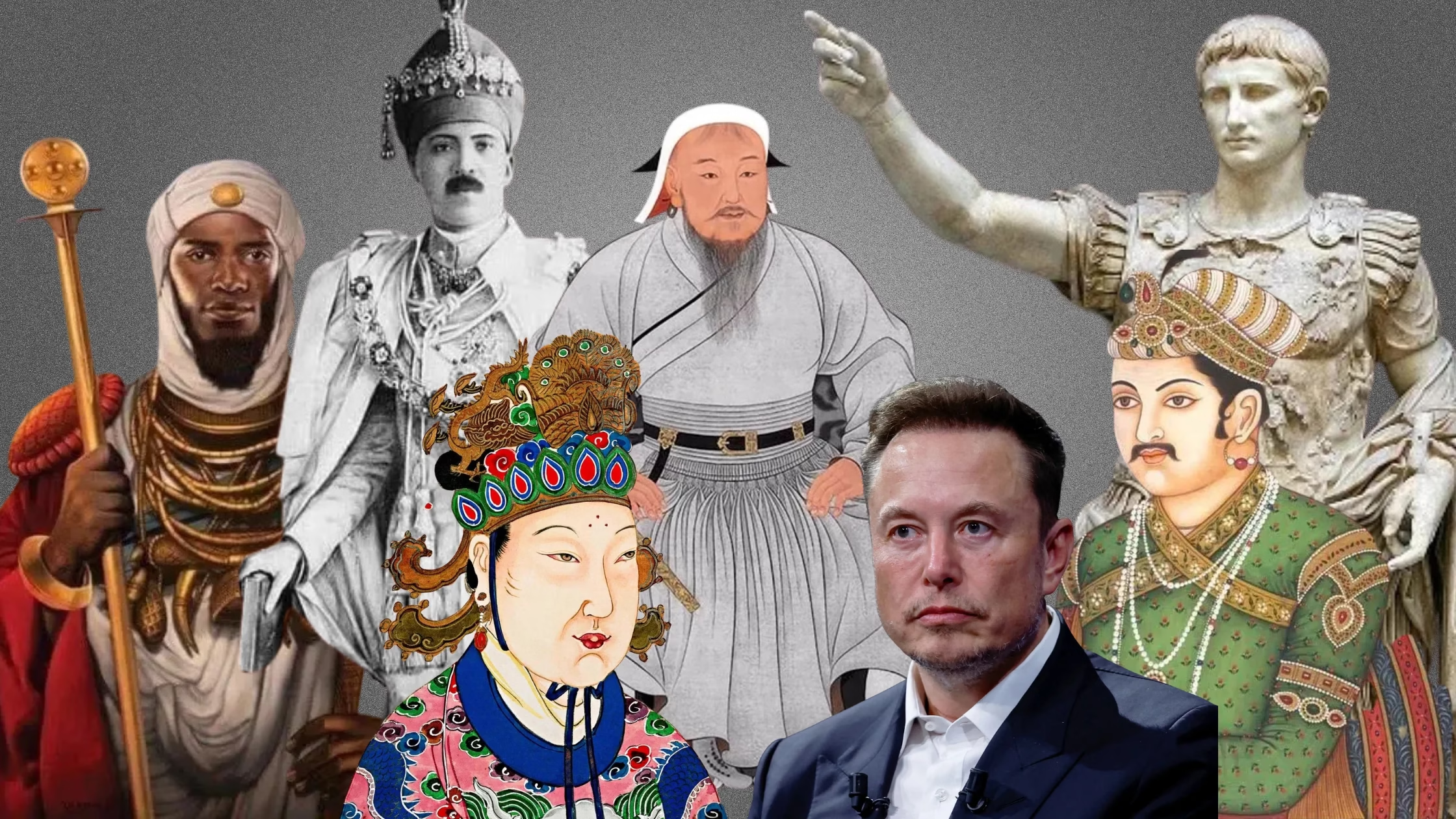

The history of humanity is not only the story of wars and inventions but also the story of wealth. The richest people in the world shaped their times in unique ways. Some ruled empires stretching across continents, while others created businesses that transformed entire industries. Their wealth was not just a number on paper but the key to influence, power, and legacy. In this article, we will look at their lives, their struggles, their achievements, and the way they built fortunes so large that they still capture our imagination today.
Genghis Khan – $100 Trillion Fortune

The name Genghis Khan instantly brings images of conquest and vast armies sweeping across Asia and Europe. But behind the legend of the warrior was a man who rose from nothing to become the ruler of the largest contiguous empire in history. Born in 1162 as Temüjin, his early life was marked by hardship. When his father was poisoned by enemies, his family was abandoned by their tribe. They lived in extreme poverty, surviving on wild fruits, small animals, and whatever they could find.
Temüjin’s story could have ended there, but his resilience was unmatched. From a young age, he showed a natural gift for leadership. He united smaller tribes by offering them loyalty, discipline, and the promise of rewards. By 1206, he had consolidated enough power to be crowned Genghis Khan — the universal ruler.
Top 5 Richest Sportsmen in the World in 2025
Top 5 Largest Museums in the World
Top 10 Cryptocurrencies in 2025
His empire spread from China to Europe, controlling the famous Silk Road. This control brought him unimaginable wealth, measured today at about $100 trillion. What made his fortune unique was that it wasn’t simply gold or treasure. His wealth lay in the control of trade, taxation, and the resources of vast lands. Unlike modern billionaires, his empire meant he could command armies, dictate trade, and control economies.
Despite his reputation for brutality, Genghis Khan was surprisingly open-minded. He promoted religious tolerance, encouraged trade, and even supported the sharing of knowledge across his empire. His story shows how someone born in extreme poverty could become one of the richest people in the world ever.
Emperor Shenzong of Song – $30 Trillion Fortune

During the Song Dynasty, China became one of the richest nations on Earth, and Emperor Shenzong presided over this golden era. Born in 1048, he ascended to the throne at just 25 years old. Unlike many rulers who gained wealth through war, Shenzong’s fortune came from innovation.
The Song Dynasty introduced the world’s first paper money, making trade faster and more efficient. Under his rule, China experienced massive growth in agriculture, craftsmanship, and international trade. Silk, porcelain, and tea flowed to foreign markets, enriching the empire. His reign saw wealth estimated at $30 trillion when adjusted for today.
Emperor Shenzong was a curious and intelligent man. He supported scholars, encouraged new technologies, and sought to reform taxation to improve state revenues. Though his attempts at reform were not always successful, his vision showed he understood the importance of managing resources carefully.
His wealth was not just a reflection of personal fortune but of an empire that became an economic powerhouse centuries ahead of its time. This places him firmly in the ranks of the richest people in history.
Akbar the Great – $25 Trillion Fortune

India’s Mughal Empire reached its cultural and economic peak under Akbar the Great, born in 1542. At just 13 years old, he became emperor after the death of his father, Humayun. Despite his young age, Akbar displayed remarkable wisdom and leadership.
Through a combination of military campaigns and smart alliances, Akbar expanded the empire across South Asia. He was not only a warrior but also a visionary leader. He introduced policies of religious tolerance, abolished certain unfair taxes, and created opportunities for dialogue among different faiths.
His empire’s prosperity was legendary, with an estimated worth of $25 trillion in modern terms. India thrived through agriculture, trade in textiles and spices, and precious stones. Akbar personally oversaw reforms to taxation and governance, ensuring that his empire was stable and productive.
What made Akbar stand out was his character. He was known to listen to scholars, artists, and spiritual leaders from various traditions. His wealth was immense, but his legacy was his effort to create harmony in a diverse empire. Truly, he stands as one of the richest people in the world and one of history’s most enlightened rulers.
Empress Wu Zetian – $16 Trillion Fortune

Breaking through the barriers of her time, Wu Zetian became the only female emperor of China. Born in 624, she started as a concubine but rose to power through intelligence, determination, and political skill. By 690, she declared herself the ruler of her own Zhou Dynasty.
Her reign was marked by bold decisions. She reformed agriculture, expanded trade routes, and strengthened taxation systems, making her empire worth about $16 trillion today. Under her leadership, China prospered and its influence grew across Asia.
Wu Zetian was not without controversy. She was ruthless toward rivals and used harsh measures to secure her throne. But she also promoted education, bringing more scholars and officials into government, and gave opportunities to people who had previously been ignored.
Her story is one of resilience and determination, proving that gender could not limit power in ancient times. As one of the richest women in history, her legacy continues to inspire.
Augustus Caesar – $5 Trillion Fortune

When Julius Caesar was assassinated, few imagined his young heir Gaius Octavius would change Rome forever. Known later as Augustus Caesar, he became the first Roman Emperor and established one of the most stable periods in Roman history. Born in 63 BCE into a modest patrician family, Augustus was intelligent, politically sharp, and determined.
His rise to power was far from easy. After his great-uncle Julius Caesar was murdered, Augustus faced powerful rivals, including Mark Antony and Cleopatra. Through strategic alliances and military victories, he outmaneuvered them all, eventually becoming Rome’s uncontested leader in 27 BCE.
Augustus controlled enormous wealth — around $5 trillion in today’s terms. This fortune came from imperial taxation, the spoils of war, trade routes across the Mediterranean, and control over fertile lands that fed Rome’s massive population. His personal influence extended into nearly every aspect of Roman life.
Interestingly, Augustus lived more modestly than many emperors who came after him. He focused on stability rather than constant expansion, building infrastructure, roads, and monuments that still stand today. His personal discipline and political genius allowed him to build an empire whose wealth and influence rival any in history. Without doubt, he deserves his place among the richest people in the world.
Mansa Musa – $400 Billion Fortune

If there is one name that echoes when people talk about wealth, it is Mansa Musa, the emperor of Mali. Born in 1280, Musa inherited a kingdom rich in natural resources, particularly gold. When he became emperor in 1312, Mali controlled the majority of the world’s gold supply.
Musa’s estimated worth was $400 billion, making him one of the richest people in the world ever. His most famous journey was his pilgrimage to Mecca in 1324. On the way, he gave away so much gold in Egypt that he caused inflation for years. This journey not only displayed his wealth but also placed Mali on the world map.
Back home, Musa invested in building mosques, libraries, and schools, particularly in Timbuktu, which became a center of learning. He was devoutly religious but also forward-thinking, ensuring that Mali’s wealth was used to strengthen education and culture.
Mansa Musa’s story reminds us that Africa once held some of the richest empires the world has ever seen. His combination of wealth, generosity, and vision makes him unforgettable.
Elon Musk – $366 Billion Fortune

Finally, in the modern age, Elon Musk symbolizes how innovation creates wealth. Born in 1971 in South Africa, Musk was a curious child who loved science and technology. At just 12, he sold a video game he had programmed.
After moving to the United States, Musk co-founded PayPal, which was later sold to eBay. With the money, he launched Tesla and SpaceX, companies that transformed the automotive and space industries. His other ventures include Neuralink and The Boring Company.
At his peak, Musk’s net worth reached $366 billion, making him the modern Richest People in the World. Unlike emperors who built wealth from conquest, Musk’s fortune comes from ideas, risk-taking, and innovation.
Musk is known for his bold dreams—colonizing Mars, creating sustainable energy, and rethinking transportation. He is ambitious, controversial, and often unpredictable, but he represents how wealth in the 21st century is driven by technology and vision.
John D. Rockefeller – $340 Billion Fortune

Modern industrial wealth begins with John D. Rockefeller. Born in 1839 in New York, Rockefeller grew up in a poor family. From a young age, he showed a gift for business, starting work as a bookkeeper at 16.
In 1870, he founded Standard Oil, which grew to dominate the American oil industry. By controlling nearly 90% of oil production, he became America’s first billionaire. His fortune, adjusted for inflation, was about $340 billion.
Despite his immense wealth, Rockefeller was famously frugal. He tracked every penny he spent, even as the richest man alive. Yet, he was also one of the greatest philanthropists in history. He funded universities, medical research, and public health programs, leaving a lasting impact on society.
His story proves that the richest people in the world are not always born into privilege—they can rise through hard work and vision.
Mir Osman Ali Khan – $230 Billion Fortune
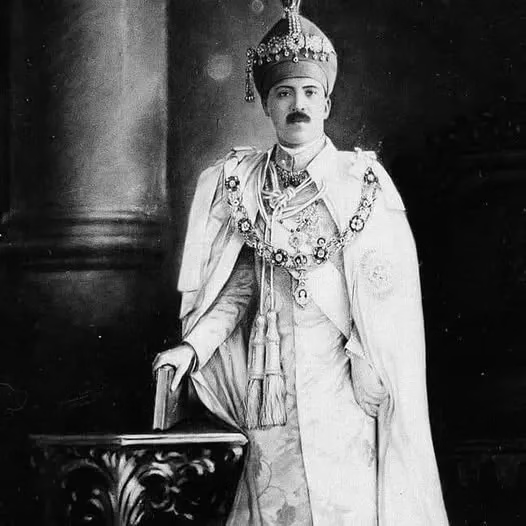
The last Nizam of Hyderabad, Mir Osman Ali Khan, was one of the wealthiest royals of the 20th century. Born in 1886, he became ruler at just 25. His reign lasted nearly four decades, during which Hyderabad was known for its prosperity.
His personal wealth was estimated at $230 billion. This included gold reserves, precious jewels, and vast lands. He even owned the famous Jacob Diamond, which he casually used as a paperweight.
Despite his riches, the Nizam was known for his simplicity. He often wore plain clothes, used old pens, and lived a modest lifestyle. But he used his fortune generously, funding hospitals, universities, and public works that benefited millions.
His story shows the contrast between unimaginable personal wealth and personal humility. He stands as one of the most unique names among the richest people in the world.
Conclusion
From conquerors like Genghis Khan to visionaries like Elon Musk, the richest people in the world reveal that wealth is never just money—it is influence, ambition, and legacy. Some shaped civilizations, others transformed industries, but all of them changed history in their own way. Their lives remind us that fortune is fleeting, but the mark they left on the world endures.
FAQs
1. Who was the richest person in history?
Historians debate between Genghis Khan and Mansa Musa.
2. Who is the richest person in the world today?
Elon Musk, though his net worth changes with markets.
3. How did rulers like Augustus Caesar measure wealth?
Through land, taxation, and control of economies.
4. Why do historical fortunes seem larger than today’s?
They controlled entire empires, not just companies.
5. What connects all the Richest People in the World?
Their ability to shape history through wealth and power.