If Pakistan’s auto market were a person, she’d be a resilient, slightly dramatic queen: knocked down by inflation, FX crises, and policy zigzags then strutting back as soon as the music changes. 2023–24 was a stall. 2025 is the tentative restart. The question is: do we finally have the fuel (policy, financing, localization, energy) to keep the engine humming?
Two things quietly flipped the script this year: lower interest rates and a somewhat calmer currency. After peaking at 22% in 2024, the State Bank slashed its policy rate to 11–12% by mid-2025, easing the financing chokehold that killed auto demand in 2023. That’s showing up in the numbers: auto financing ticked up to roughly Rs277 billion by June 2025 (up ~2% MoM), with analysts flagging a broader recovery as rate cuts filter through
On the sales side, monthly flashes are finally pointing north. By July 2025, market trackers reported broad-based volume improvements across segments, with multiple OEMs clawing back share. It’s not 2017’s party yet but the stall is over.
What’s selling (and what that tells us)
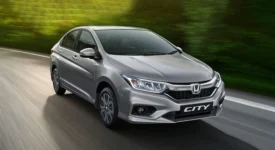
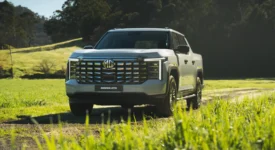
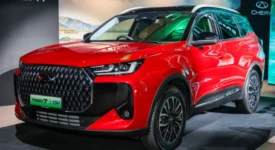
Crossovers and “value” SUVs keep eating the old “sedan at any cost” mentality. Consumers now optimize for resale, ground clearance, and fuel economy, not just brand nostalgia. July slices show non-traditional players quietly taking share, while legacy badges are fighting to hold the line.
Commercial vehicles: your most honest macro indicator are stabilizing from depressed levels. Truck/bus volumes are still a shadow of their peak, but they’re no longer in freefall, hinting that logistics and construction are breathing again.
EVs and hybrids are visible, not dominant. Policy carrots exist, but charging economics, grid reliability, and upfront costs are the real boss battle. More on that below.
Pakistan’s auto policy history is a relay race of intentions. The AIDEP 2021–26 (Automotive Industry Development & Export Policy) promised a pivot: localization, new-entrant friendliness, and a tech tilt toward EVs and hybrids. It built on the earlier deletion/localization regimes from the 1987–2004 era, and it remains the umbrella for incentives today. The direction is right; the execution, especially on stable duty structures and predictable SROs still needs discipline.
EVs got their own booster rockets under the National EV Policy, with targets like 30% of new car sales by 2030 and higher penetration for two- and three-wheelers. Ambitious? Yes. Achievable? Only if tariffs, power prices, and charging rollout stop playing musical chairs.
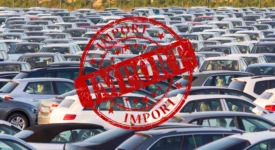
And then there’s the used-car wildcard. In August 2025 the government slapped a 40% additional import tariff on used vehicles, phasing it down to zero over four years while signaling looser age limits ahead. The logic: protect local jobs and FX while creating a glide path to competition. The risk: policy yo-yoing can whiplash demand, distort pricing, and spook investors. Predictability beats patches.
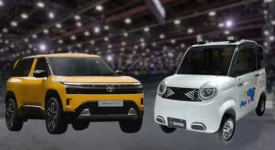
Here’s the plot twist: BYD, the world’s EV juggernaut, is building local assembly near Karachi, targeting 2026 SOP with capacity up to 25,000 units/year (double-shift). Early imports reportedly sold above plan; PHEVs (like BYD’s Shark 6) could be the transitional sweet spot for Pakistan’s range anxiety and grid constraints. If BYD executes and if policy/energy prices don’t sabotage the math, Pakistan could finally have an EV/hybrid story that’s not just press releases.
Meanwhile, government measures like reduced electricity tariffs for EV chargers in 2025 help, but they must be ring-fenced from energy-sector volatility. Stable capex returns for charging operators will do more for adoption than slogans.
Five patterns to watch (so you’re not blindsided)
Rate-sensitive demand yo-yo Pakistan remains a financing-led market. When policy rates fall, volumes follow with a lag; when they spike, sales freeze. Expect a delayed but material lift through late-2025 if macro stays stable.
SUVification of the middle class The “aspiration premium” increasingly goes to crossovers. OEMs that can localize high-rotation crossover parts (bumpers, lamps, seats, some drivetrain) will win margin and price control.
Localization > assembly AIDEP is explicit about moving beyond screwdriver economics. Parts ecosystems (stamping, plastics, electronics, batteries) determine resilience when FX is tight. Vendors want multi-year tariff certainty, not six-month experiments.
Used imports set the floor The new tariff schedule aims to protect local assembly while letting older imports in over time. That “floor price” for mobility will shape OEM pricing power and used-market liquidity. Watch how enforcement and phasing actually play out
Commercial vehicles as macro pulse When trucks/buses move, GDP breathes. A construction/logistics uptick will transmit to CV orders within quarters, your best early signal of a sustained recovery.
The 12-month outlook: cautiously bullish, selectively aggressive
Volumes: Expect a gradual recovery into 2026 as financing normalizes. If rates drift toward low double digits and inflation cools, first-time buyers and fleet renewals return.
Pricing: PKR stability matters more than anything. If FX stays range-bound, discounting and model refreshes will reappear. If it wobbles, OEMs will protect margin and defer launches. (This is Pakistan, we price in FX risk first.)
Product mix: Hybrids and efficient crossovers win share; pure EVs grow from a tiny base where TCO beats ICE in high-mileage use cases (ride-hail, last-mile).
Capex: Smart money flows to local vendor development, battery/pack assembly pilots, and after-sales networks. The most investable nodes are where volumes, policy incentives, and unit economics intersect.
What the government should do (if we’re serious)
Lock a five-year tariff path: no mid-year surprises. Publish the glide path once, then defend it. Investors value credibility more than “incentive of the month.”
Targeted EV/HV incentives tied to local value-add (packs, motors, electronics) rather than blanket exemptions. Reward parts localization, not just CKD.
Finance the transition: enable cheaper long-tenor auto credit (refinance window or credit guarantees) to crowd in banks as rates fall, without re-inflating bad habits
Charging that pencils out: keep EV charging tariffs predictable; standardize interconnection and land-use rules to derisk private investment.
Data transparency: mandate high-frequency disclosures (sales, localization %, import content) so markets can price risk and hold everyone accountable.
Pakistan’s auto industry finally has tailwinds: cheaper money, new entrants with serious tech, and a policy scaffold that, if honored, could turn assembly into manufacturing. But the road is narrow. Stick to predictable policy, double down on localization, and make total cost of ownership the hero. Do that, and 2026 won’t just be a recovery, it’ll be a reset.