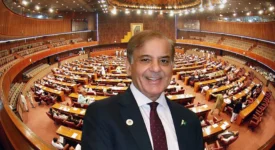
Politics in Pakistan has always been full of contradictions, but the latest development raises some of the toughest questions yet. Shama Junejo, a figure who once openly praised Israeli leadership and even urged Pakistan to recognize Israel, has suddenly found herself seated inside Prime Minister Shehbaz Sharif’s official UN delegation.

This isn’t just a symbolic presence. Reports confirm she traveled on the PM’s plane, sat directly behind the Foreign Minister during key discussions, stayed in the same hotel as the delegation, and even assisted in drafting policy briefs. For a country that loudly brands itself as a defender of Palestine, this move has shocked observers.
New Zealand PM Says Netanyahu Has ‘Lost Clarity’ Amid Gaza Crisis
Pakistan and Saudi Arabia Sign Landmark Strategic Mutual Defence Pact
Pakistan Condemns Israeli Violation of Qatar Sovereignty: FO Spox

The Background: A Public Record of Pro-Israel Views
Shama Junejo’s digital footprint is clear. Her past tweets show her meeting Israeli diplomats, praising Netanyahu’s office, and consistently calling for Pakistan to normalize ties with Israel. These are not minor slip-ups or casual remarks; they represent a pattern of open admiration for Tel Aviv’s leadership.

Now, contrast that with the current reality. The PMLN government stands on international podiums waving the Palestinian flag, condemning Israeli bombings in Gaza, and urging the global community to stand with the oppressed. Yet, behind closed doors, they have brought someone with pro-Israel sympathies into the very heart of Pakistan’s diplomatic decision-making at the UN.

Why This Matters: More Than Just Symbolism
Some government supporters have defended her inclusion by saying she is “just an academic.” But that claim doesn’t add up. If she were only there for academic input, why is she seated during sensitive briefings, helping draft speeches, and accompanying the PM’s core team?

This is not the role of an academic observer. This is active policy involvement. And that raises a serious question: Whose voice is shaping Pakistan’s foreign policy right now?
At a time when Gaza is burning and international outrage against Israel is at its peak, Pakistan has allowed someone with a pro-Israel history to influence the very messaging it presents at the United Nations.

The Legitimacy Question
This controversy comes at a sensitive moment for the PMLN government. Its legitimacy is already questioned after the Commonwealth’s suppressed report on election rigging. For a fragile government, the optics of appointing someone like Shama Junejo are politically disastrous.
Credentials? None that justify her role at the UN. Experience? Nothing that proves she can speak for Pakistan on such a critical stage. Instead, it looks like yet another example of elites bending rules to protect their own circle, regardless of the damage it causes to national credibility.

Double Standards in Full View
This is the real issue: publicly pro-Palestine, privately pro-Israel. Pakistan’s rulers cannot claim to be the defenders of Gaza while simultaneously allowing pro-Israel figures to draft their foreign policy briefs.

It’s not just hypocrisy. For many Pakistanis, it feels like betrayal. The government is sending one message to the people and another to international players, testing the waters of normalization with Israel under the guise of official diplomacy.
So, the question remains: when the delegation sitting at the UN looks like it is running an Israel internship program, who are they really representing? Pakistan, or Tel Aviv?

Final Thoughts
This debate isn’t just about Shama Junejo. It’s about the direction Pakistan’s foreign policy is heading. It’s about transparency, accountability, and whether leaders mean what they say when they stand with Palestine.
Because right now, the gap between words and actions has never looked wider.
FAQs
1. Who is Shama Junejo?
Shama Junejo is a UK-based Pakistani who has openly shared pro-Israel views in the past, including praise for Netanyahu’s government and calls for Pakistan to recognize Israel.
2. Why is her inclusion in Shehbaz Sharif’s UN delegation controversial?
Because it contradicts Pakistan’s official pro-Palestine stance. Having someone with a pro-Israel history in a policy-shaping role at the UN raises questions about the government’s sincerity.
3. What role did she play in the UN delegation?
She traveled with the Prime Minister’s team, stayed in the same hotel, attended closed-door briefings, and reportedly helped draft policy documents.
4. Does she have any official diplomatic credentials?
No official record suggests that Shama Junejo holds relevant diplomatic experience. Her involvement appears to be based on political connections rather than qualifications.
5. What does this mean for Pakistan’s foreign policy?
It signals confusion and possible double-dealing. While Pakistan publicly supports Palestine, moves like this suggest behind-the-scenes efforts to soften toward Israel a step that could damage trust at home and abroad.