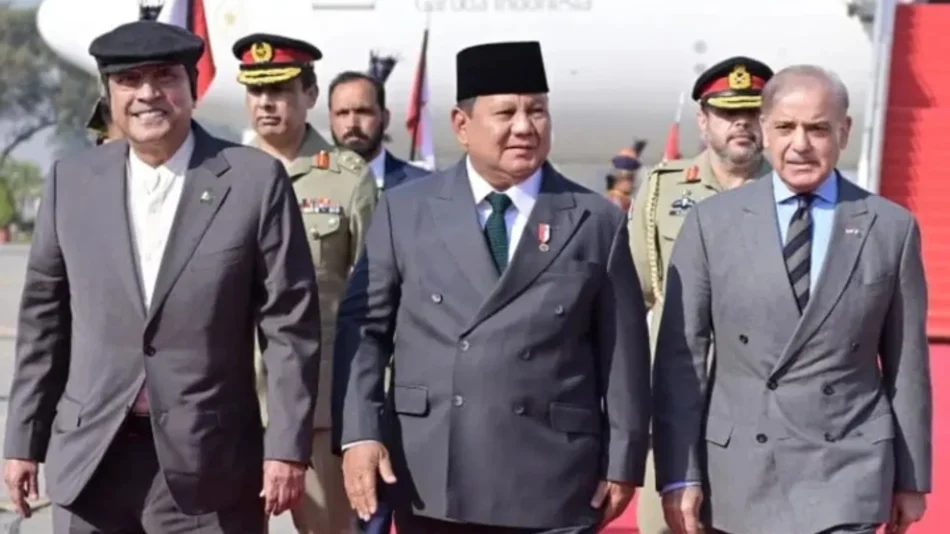

In a significant move to deepen bilateral cooperation, Pakistan and Indonesia have signed a series of landmark agreements during Indonesian President Prabowo Subianto‘s first official visit to Islamabad. The accords, spanning health, education, trade, and security, mark a new chapter in relations on the 75th anniversary of diplomatic ties between the two nations.
Key Outcomes of the Visit
Prime Minister Shehbaz Sharif announced that Pakistan will send doctors, professors, and technical experts to Indonesia as part of a new partnership framework. This forms a core part of the enhanced cooperation in the health and education sectors.
Several Memoranda of Understanding (MoUs) were signed, focusing on:
- Higher education collaboration
- Small and medium enterprise (SME) development
- Anti-narcotics cooperation
- Preservation of historical documents
A Renewed Commitment
President Prabowo expressed appreciation for Pakistan’s warm hospitality, while both leaders reaffirmed their commitment to elevating bilateral trade and investment. They also agreed to maintain a united stance on global issues, including the ongoing situation in Gaza, highlighting shared perspectives on international peace and justice.
The visit underscores a mutual intent to transform the long-standing friendly relations into a more robust, multifaceted partnership for the coming years.
FAQs
Q1: What is the main outcome of the Indonesian President’s visit to Pakistan?
A1: The key outcome is the signing of multiple cooperation agreements in health, education, trade, and security, including a plan for Pakistan to send doctors and experts to Indonesia.
Q2: Which sectors are covered in the new agreements?
A2: The MoUs cover higher education, SME development, anti-narcotics collaboration, and the preservation of historical documents, alongside broader health and technical exchanges.
Q3: Why is this visit significant?
A3: This visit is particularly significant as it marks the 75th anniversary of Pakistan-Indonesia diplomatic relations and sets a roadmap for deeper, practical cooperation in strategic sectors.
Q4: Did the leaders discuss global issues?
A4: Yes. Both leaders reaffirmed a shared stance on international issues, expressing a unified position on the situation in Gaza and other global matters.