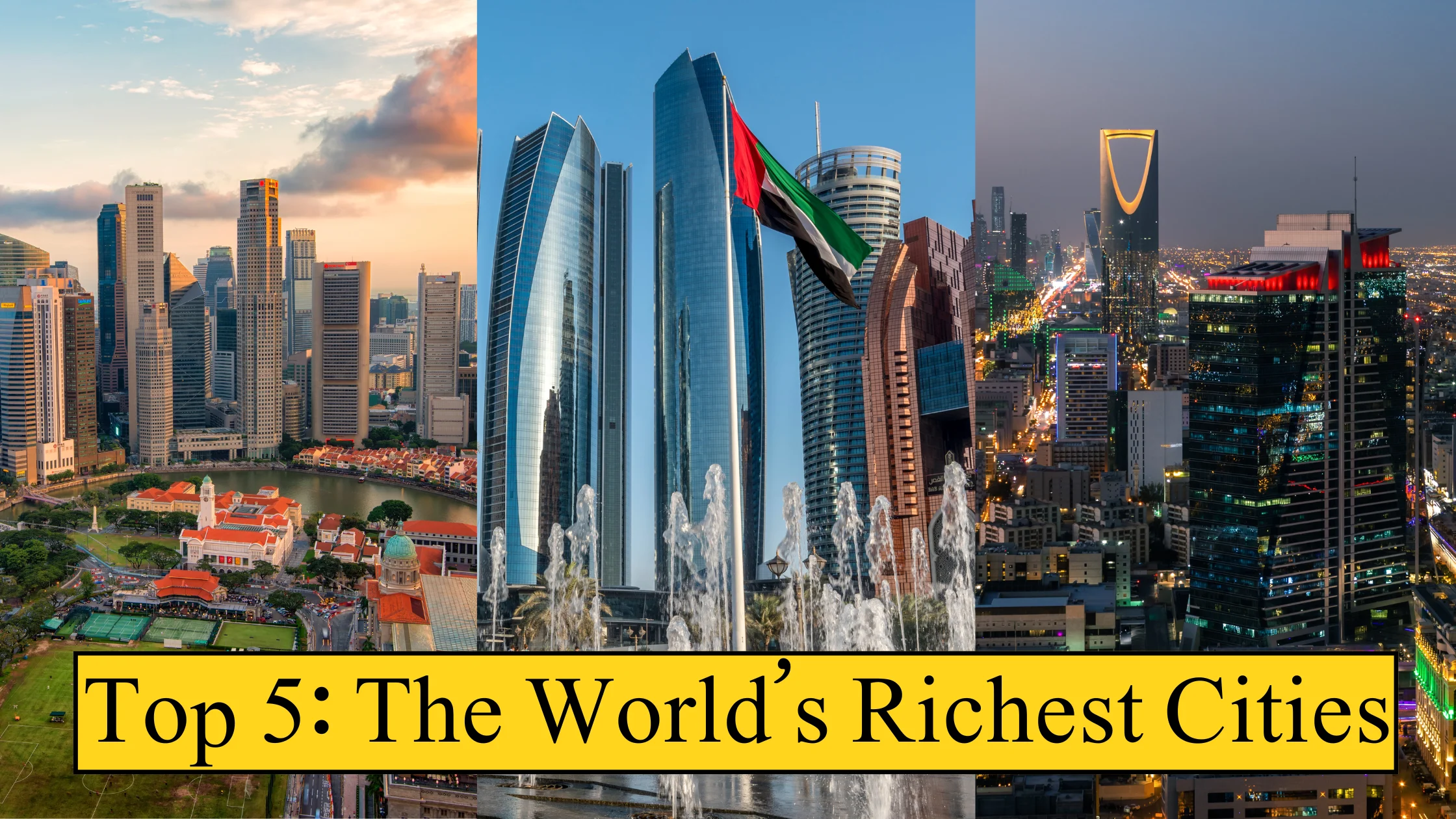

Wealth isn’t spread evenly across the world it concentrates in powerful cities that hold massive financial sway. World’s Richest Cities don’t just build skyscrapers and luxury lifestyles; they move global markets, shift currencies, and reshape geopolitics. The top five wealthiest cities Abu Dhabi, Oslo, Beijing, Singapore, and Riyadh collectively control trillions of dollars. This article explores how these financial powerhouses shape the world far beyond their borders.
The Power of Sovereign Wealth Funds
When you hear about trillions of dollars sitting in one city, it usually comes from something called a Sovereign Wealth Fund (SWF). These are massive state-owned investment pools built from natural resources like oil or from trade surpluses. Instead of letting money sit idle, these funds buy shares in global companies, finance infrastructure, and even rescue economies in crisis.
Top 10 Richest People in the World (2025)
The World’s Youngest Self-Made Billionaire: MrBeastUsed
In short, sovereign wealth isn’t just money it’s influence, stability, and control.
Abu Dhabi: The Richest City in the World ($1.78 Trillion)

Abu Dhabi tops the list with a jaw-dropping $1.78 trillion in sovereign wealth. The backbone is the Abu Dhabi Investment Authority (ADIA), one of the largest and most secretive funds in the world.
This wealth originates from decades of oil revenue, but it doesn’t just stay in the Gulf. Abu Dhabi owns stakes in European real estate, American tech firms, and even global sports franchises. The city is quietly steering markets every time ADIA makes a move.
Oslo: The Norwegian Wealth Capital ($1.74 Trillion)

Right behind Abu Dhabi is Oslo with $1.74 trillion, powered by the world’s largest sovereign wealth fund: The Government Pension Fund Global (GPFG). Unlike other funds, Norway focuses on long-term, sustainable, and ethical investments.
Oslo may not be the flashiest city, but it has quietly become one of the biggest shareholders in major global corporations—everything from Apple to Nestlé. It’s wealth with responsibility, setting standards for transparency and sustainability.
Beijing: China’s Economic Giant ($1.33 Trillion)

China’s capital, Beijing, is more than a political hub—it’s a financial giant with $1.33 trillion under management. Its sovereign wealth is spread across multiple funds like China Investment Corporation (CIC).
But Beijing plays a different game. Unlike Norway’s sustainability focus, China uses its wealth for strategic leverage. From funding infrastructure across Africa to investing in advanced technology, Beijing isn’t just seeking profits—it’s buying influence.
Singapore: Asia’s Financial Hub ($1.28 Trillion)

Tiny in size but mighty in wealth, Singapore controls about $1.28 trillion through its funds Temasek Holdings and GIC.
Why is Singapore so powerful? Its geography makes it a gateway between East and West. Multinational companies set up headquarters here because of business-friendly laws and tax incentives. The city invests heavily in finance, technology, and healthcare, making it one of the world’s smartest financial hubs.
Riyadh: Saudi Arabia’s Financial Powerhouse ($1.15 Trillion)

Last but not least, Riyadh joins the top five with $1.15 trillion. Its Public Investment Fund (PIF) is a central piece of Saudi Arabia’s Vision 2030, which aims to diversify the economy away from oil.
From owning stakes in Uber to investing in futuristic city projects like NEOM, Riyadh isn’t just following the oil game—it’s reinventing its economic identity. The city is reshaping not only Saudi Arabia but also the broader Middle East.
Comparing the Top 5 World’s Richest Cities
While each city has a unique story, they share some similarities:
- Heavy reliance on sovereign wealth
- Long-term investment strategies
- Global influence across industries
But they differ too—Oslo focuses on ethics, Beijing on politics, Abu Dhabi on secrecy, Singapore on innovation, and Riyadh on transformation.
The Role of Technology in Wealth Accumulation
Technology is the new oil, and these cities know it. Investments in AI, blockchain, and fintech are central to their strategies. Singapore leads in digital finance, Beijing dominates in AI, and even Abu Dhabi is funding renewable tech to secure future wealth streams.
Conclusion
The World’s Richest Cities Abu Dhabi, Oslo, Beijing, Singapore, and Riyadh aren’t just places on a map. They are powerhouses steering markets, shaping geopolitics, and influencing the future. From oil riches to tech investments, these cities prove that concentrated wealth can dictate the rhythm of global finance.
FAQs
1. Which city has the largest sovereign wealth fund?
Abu Dhabi holds the crown with $1.78 trillion through the Abu Dhabi Investment Authority.
2. Why is Abu Dhabi the richest city?
Its wealth comes from decades of oil revenue, invested globally through sovereign wealth funds.
3. How do World’s Richest Cities affect smaller nations?
Through investments in infrastructure and industries, creating both opportunities and dependencies.
4. Which Asian city holds the most wealth?
Beijing and Singapore are Asia’s wealth leaders, with over $1.2 trillion each.
5. Can new join the World’s Richest Cities list?
Yes, emerging hubs like Doha, Hong Kong, and San Francisco could join as industries evolve.