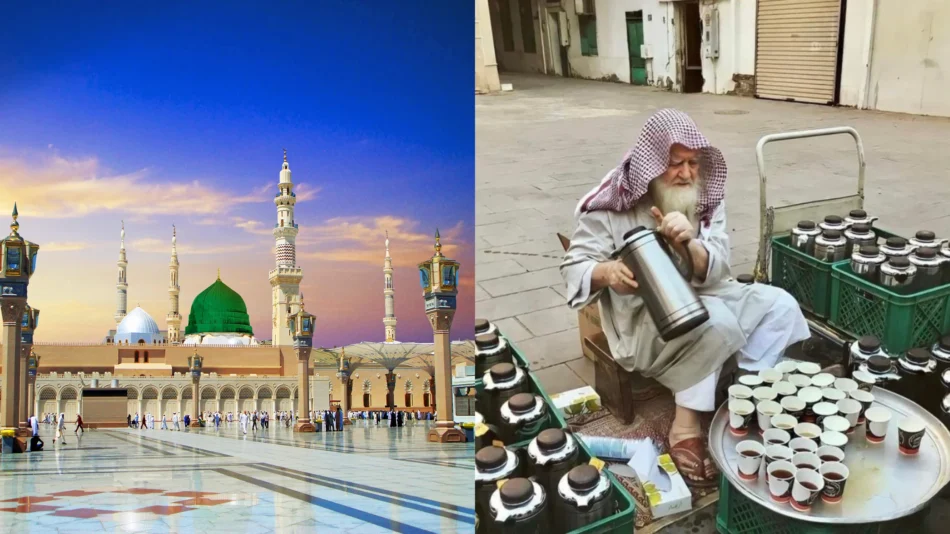

In a quiet, enduring display of faith and generosity, an elderly Syrian man known as Sheikh Ismail has become a beloved fixture in the holy city of Medina, offering free tea, coffee, and dates to pilgrims for the past four decades. His simple stall is a beacon of warmth and hospitality for countless visitors from around the world.
Having lived in Medina for over 40 years, Sheikh Ismail has dedicated his life to a humble mission: welcoming strangers with the same kindness one would show to honored guests. This heartfelt gesture, sustained day after day, year after year, transcends language and culture, offering spiritual nourishment alongside physical refreshment.
INDONESIAN COUPLE FULFILLS 40-YEAR DREAM OF PERFORMING HAJJ
His selfless service embodies the core Islamic values of charity (sadaqah) and hospitality. For many pilgrims, encountering Sheikh Ismail is a profoundly moving experience, a tangible reminder of the compassion and community that lies at the heart of their faith. His enduring devotion has made him a living legend, inspiring others through his unwavering commitment to humanity.
FAQs: Sheikh Ismail’s 40 Years of Service in Medina
1. Who is Sheikh Ismail?
Sheikh Ismail is an elderly Syrian man who has been living in Medina, Saudi Arabia, for over 40 years. He is renowned for his voluntary service of offering free refreshments to pilgrims.
2. What does he offer to the pilgrims?
He generously serves free tea, coffee, and dates to anyone who passes by his stall, asking for nothing in return.
3. How long has he been doing this?
He has been performing this act of service for an remarkable four decades.
4. Why is his story so significant?
His story is a powerful example of unconditional kindness and hospitality. In a world often focused on material gain, his selfless dedication for 40 years inspires people by showcasing the pure, simple essence of faith and human connection.
5. What values does his action represent?
His service is a living example of key Islamic and universal values, including charity (sadaqah), selfless hospitality (Ibrahim’s tradition), community, and the immense spiritual reward found in serving others.