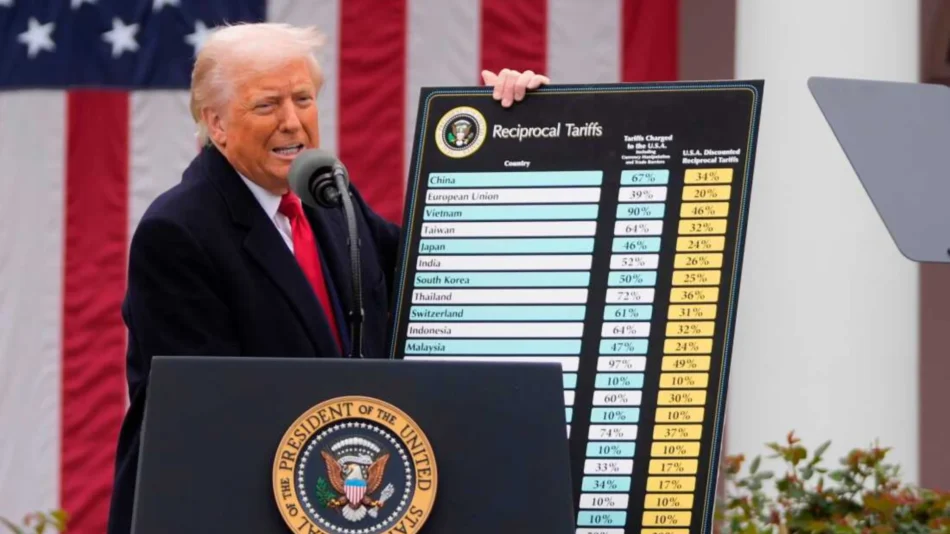

The United States has announced a new 10 percent tariff on imports from Pakistan, placing the country among 60 trading partners affected by a fresh round of trade measures introduced by President Donald Trump’s administration. The decision is part of a broader effort by Washington to strengthen global action against forced labour and ensure that imported goods entering the US market meet international labour standards.
The new tariffs will come into effect on Friday and replace the temporary global tariff introduced earlier this year. Under the revised policy, countries will face duties ranging between 10 percent and 12.5 percent, depending on the outcome of investigations conducted by US trade authorities.
Pakistan Among Countries Facing New Tariffs
Pakistan has been placed in the 10 percent tariff category, alongside countries including India, Canada, Bangladesh, Malaysia, Mexico, Indonesia, Jordan, Sri Lanka, and the United Kingdom. Meanwhile, China and 37 other economies will face a higher tariff rate of 12.5 percent.
The tariff applies to a wide range of Pakistani exports entering the US market. However, products already covered under separate sector-specific trade measures, such as steel and aluminium, will remain subject to existing tariff rules rather than the new policy.
Why the United States Introduced the Tariffs
According to US Trade Representative Jamieson Greer, the measures are intended to encourage trading partners to strengthen efforts against forced labour in manufacturing and supply chains.
US authorities argue that American law has long prohibited the import of goods produced using forced labour and that stronger enforcement is necessary to protect ethical trade practices and create fair competition for businesses that comply with labour regulations.
The Office of the United States Trade Representative (USTR) conducted a months-long investigation before announcing the new tariff framework. Officials believe the revised measures are legally stronger than previous tariffs introduced earlier this year, several of which were challenged in US courts.
NEPRA APPROVES PER UNIT CUT IN ELECTRICITY TARIFF
Pakistan Responded During the Investigation
During the investigation, Pakistan submitted detailed responses to US authorities addressing concerns related to labour practices and supply chain transparency. Officials also presented additional information during bilateral trade discussions held earlier this month in an effort to resolve the issues raised by the United States.
Although Pakistan has not publicly commented on the latest tariff announcement, trade experts believe Islamabad may continue diplomatic engagement with Washington to reduce the impact of the new duties and strengthen trade relations.
Possible Impact on Pakistan’s Exports
The United States remains one of Pakistan’s largest export destinations, particularly for the country’s textile and apparel industry. A 10 percent tariff could increase the cost of Pakistani products for American importers, potentially affecting demand in highly competitive sectors.
Industries that could feel the greatest impact include:
- Textiles and garments
- Home textiles
- Leather products
- Sports goods
- Surgical instruments
Pakistan’s exporters may face increased pressure to remain price competitive against manufacturers from countries enjoying lower production costs or more favourable trade arrangements.
Global Reaction to Trump’s New Trade Policy
The latest tariffs have triggered criticism from several US trading partners. Japan expressed regret over the decision, while Australia’s Trade Minister described the measures as inconsistent with the spirit of free trade agreements.
Trade analysts say the new policy reflects the Trump administration’s broader strategy of linking international trade with labour standards and domestic manufacturing priorities.
Some Products Exempt from the Tariffs
Not every imported product will be affected by the new duties. The US government confirmed that several categories remain exempt, including:
- Steel and aluminium products already covered by existing tariffs
- Certain energy products
- Fertilisers
- Goods traded under the United States-Mexico-Canada Agreement (USMCA)
These exemptions are intended to avoid disrupting critical supply chains while maintaining pressure on countries under investigation.
More Trade Investigations Could Follow
The Trump administration is also investigating 16 additional economies over concerns related to excess industrial capacity and trade practices. Officials have indicated that more tariffs could be introduced in the coming months depending on the findings of those investigations.
This suggests that the current tariff announcement may represent only the first phase of a broader restructuring of US trade policy.
What This Means for Pakistan
For Pakistan, the new tariff presents both a challenge and an opportunity. While exporters may initially face higher costs and increased competition in the US market, the decision could also encourage greater investment in supply chain transparency, labour compliance, and international certification standards.
Industry representatives are expected to seek government support through trade diplomacy, export incentives, and negotiations with US authorities to minimise the long-term impact on Pakistan’s export sector.
Final Thoughts
The United States’ decision to impose a 10 percent tariff on Pakistani imports marks a significant development in bilateral trade relations. Although the immediate impact will likely be felt by export-oriented industries, particularly textiles and manufacturing, the situation also highlights the growing importance of ethical labour practices in global commerce.
As Pakistan continues discussions with US trade officials and monitors future policy developments, businesses will need to adapt to evolving international trade standards while maintaining competitiveness in one of their most important export markets.