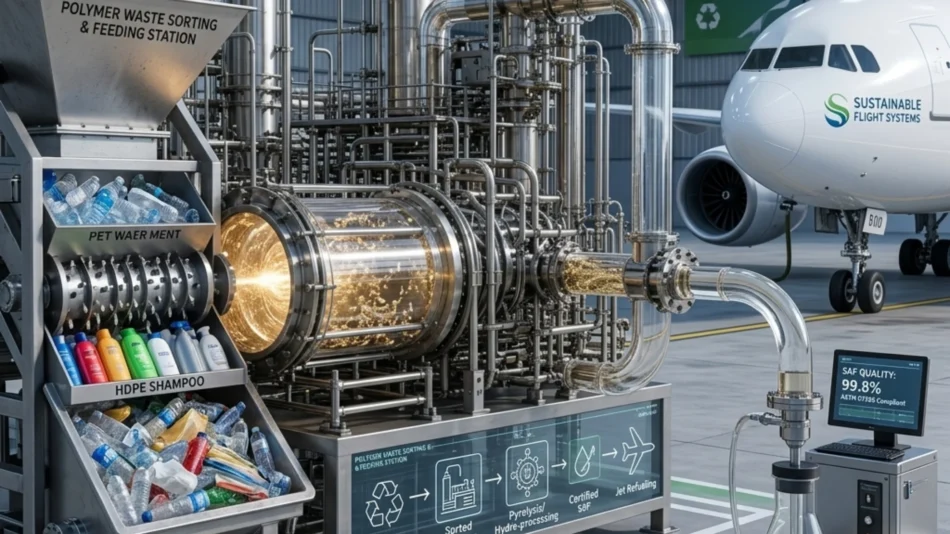

Chinese researchers have developed an innovative chemical process that can convert waste plastic into jet fuel at a relatively low cost, offering a promising solution to both plastic pollution and sustainable fuel production.
The breakthrough was achieved by a joint research team from the Shanghai Advanced Research Institute of the Chinese Academy of Sciences and Fudan University. Their study focuses on the hydrogenolysis of polyolefins—a process that breaks down long plastic molecules into valuable hydrocarbon fuels.
Polyolefins, including polyethylene and polypropylene, account for more than 60 percent of global plastic waste. Instead of ending up in landfills or being burned, these plastics can now be converted into C8–C16 hydrocarbons, the primary components used in aviation fuel.
The Silent Side Effects of a TECHNOLOGY World
To improve the conversion process, researchers developed a nickel-cobalt catalyst that efficiently breaks down plastic while minimizing the production of unwanted gases such as methane. The new catalyst achieved an impressive 82.3 percent liquid fuel yield, with 79 percent selectivity for jet fuel-range hydrocarbons under relatively mild operating conditions of 280°C and 3 MPa hydrogen pressure.
The technology is considered a major advancement because earlier methods often relied on expensive precious-metal catalysts and required harsher processing conditions, making large-scale production less economical.
If commercialized successfully, this breakthrough could help reduce global plastic waste, lower dependence on fossil fuels, and support the aviation industry’s transition toward more sustainable fuel sources. Researchers believe the innovation has the potential to play an important role in promoting a circular economy while addressing two of the world’s biggest environmental challenges: plastic pollution and carbon emissions.