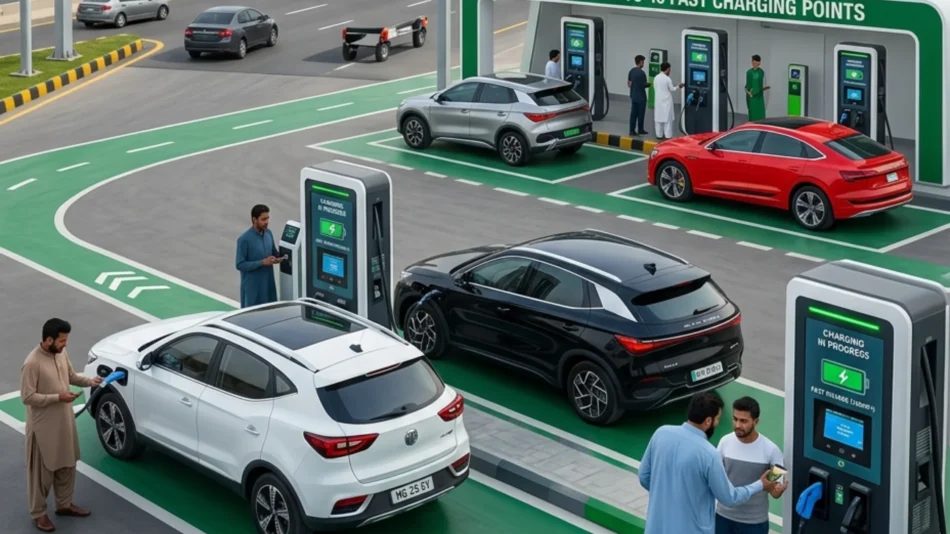

Pakistan is moving toward a major shift in transportation infrastructure with the introduction of its New Energy Vehicle Policy 2025–30, which includes plans to establish 40 high-speed EV charging stations across highways and motorways. The initiative is designed to support the growing adoption of electric vehicles (EVs) and reduce dependence on fossil fuels in the coming years.
Under this policy, the government aims to install Level 3 fast-charging stations at key travel routes to ensure long-distance EV users can recharge their vehicles quickly and efficiently. These chargers are expected to significantly reduce charging time compared to standard home or commercial charging systems, making electric travel more practical for intercity and highway commuters.
Jaecoo J7 PHEV Battery Issue in Northern Pakistan Raises Concerns Among EV Owners
The policy reflects Pakistan’s broader strategy to promote clean energy, reduce carbon emissions, and address rising fuel costs. With global oil prices fluctuating, policymakers are increasingly focusing on sustainable alternatives that can ease pressure on the national economy while supporting environmental goals.
Officials believe that expanding EV infrastructure will also encourage private sector investment in the automobile and energy industries. By improving accessibility to charging facilities, the government hopes to boost consumer confidence in electric vehicles and accelerate market demand.
The initiative is also expected to benefit urban and intercity travelers who frequently use highways, as it will allow seamless travel without long charging delays. Authorities are reportedly working on identifying strategic locations along major routes to ensure maximum coverage and convenience for users.
Industry observers view this move as a critical step toward modernizing Pakistan’s transport system and aligning it with global trends in sustainable mobility. However, experts also emphasize the need for consistent policy support, reliable power supply, and affordable EV pricing to ensure long-term success.
If implemented effectively, the charging network could play a key role in transforming Pakistan’s automotive landscape and accelerating the country’s transition toward cleaner, greener transportation solutions.